





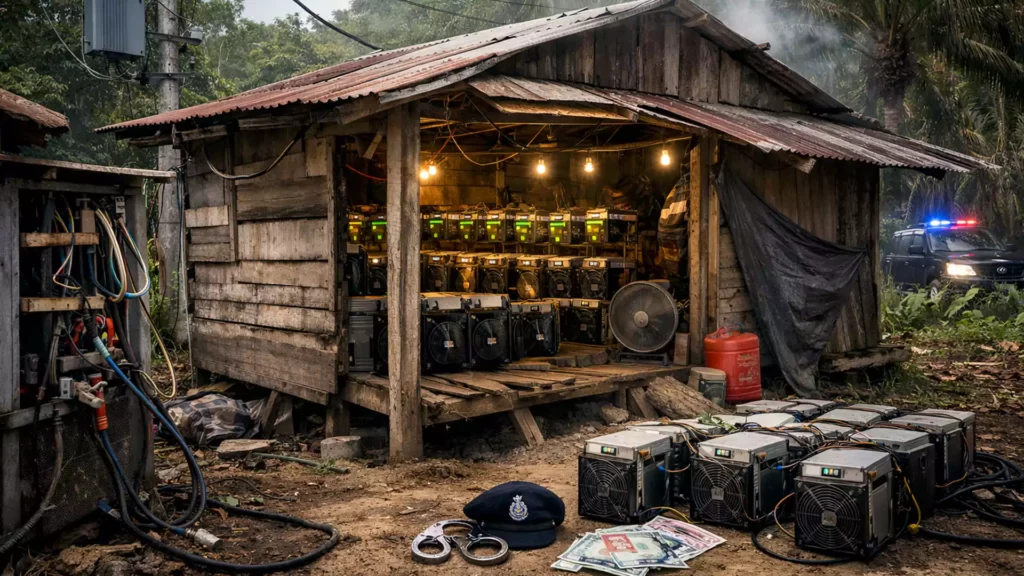
In a riveting example of how the global cryptocurrency boom is intersecting with unconventional locations, a rustic wooden hut in Malaysia once became the unlikely epicenter of a covert Bitcoin mining operation. Hidden deep within an oil palm plantation in Miri, Sarawak, this humble structure — easily mistaken for an abandoned shed — was repurposed to host dozens of powerful mining machines in an effort to generate Bitcoin, quietly feeding off stolen electricity from the national grid.
From Plantation Outbuilding to Crypto Hub
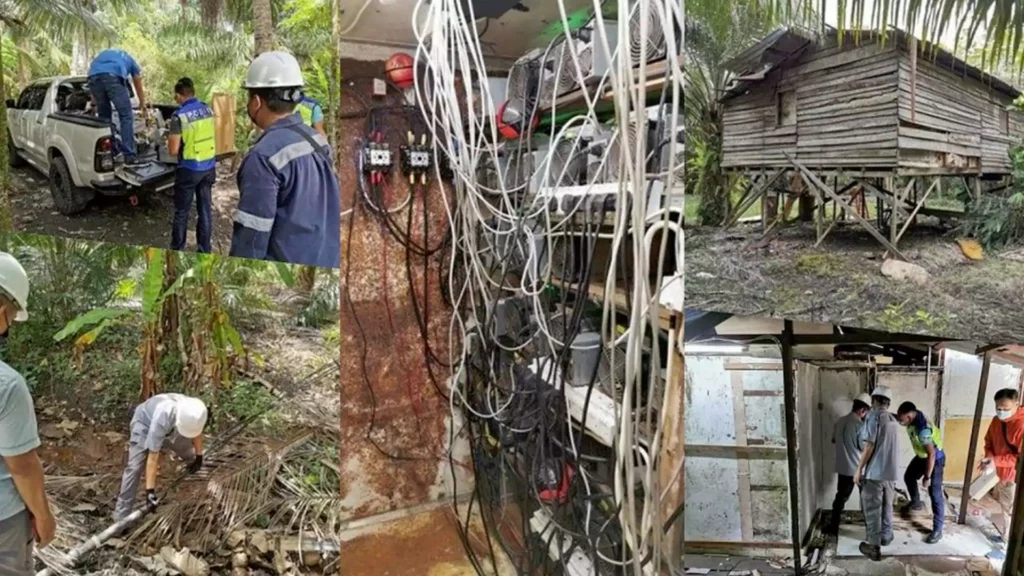
In June 2021, a routine surveillance operation by Sarawak Energy — Malaysia’s state-owned electricity provider — with assistance from the local police, uncovered a makeshift Bitcoin mining center inside the wooden hut on Jalan Padang Kerbau, Miri. Inside the structurally unstable hut, officials found 44 cryptocurrency mining machines, connected through improvised, non-standard wiring to a nearby transformer, bypassing proper electricity metering.
This mining equipment, valued at approximately RM225,000, was seized as evidence after authorities determined that the operation was siphoning electricity directly from overhead power lines without payment. The illegal electrical connection not only deprived utility companies of legitimate revenue but also posed severe safety hazards, such as the risk of fire or electrocution due to exposed and unsafe wiring.
Why a Wooden Hut?
The choice of a seemingly insignificant wooden hut in a remote plantation was strategic, not coincidental. These illegal operators intentionally chose obscure, abandoned buildings to avoid detection. By situating the operation far from urban centers, the perpetrators counted on lower foot traffic and fewer inspections. The isolated location, however, did not diminish the significant strain the machines placed on local electrical infrastructure.
Bitcoin mining rigs require high amounts of electrical power, not just to process the complex computations that validate transactions on the Bitcoin network but also to cool the hardware, which generates a tremendous amount of heat. In the case of the Miri hut, estimates suggest that the 44 Antminer machines, if similar to models like the Bitmain S9i, could have consumed around 41 MWh of electricity each month — enough to power a small town.
The Legal and Safety Implications
In Malaysia, Bitcoin mining itself is not illegal, provided that operators obtain electricity through legitimate means and comply with local regulations, including energy usage reporting and taxation. However, stealing electricity — as was happening in the wooden hut scenario — is a criminal offense under the Electricity Supply Act and can result in fines up to RM100,000 and imprisonment up to five years for offenders.
Authorities stress the severe safety risks associated with illegal connections. The ad-hoc wiring configurations found in places like the Miri hut not only bypass proper electrical safety standards but also increase the likelihood of electrical fires, structural damage, and danger to the public — especially in rural or unmonitored zones.
A Wider Pattern of Illicit Mining
The wooden hut in Miri was not an isolated case — far from it. Shortly thereafter, authorities uncovered another makeshift hut with 28 mining machines, similarly wired into the power grid without metering, also in the Miri area.
Across Malaysia, the problem has escalated into a nationwide challenge. Authorities have reported numerous raids where police, jointly with Tenaga Nasional Berhad (TNB), the national utility provider, seized dozens — and in some cases hundreds — of illicit mining rigs in various locations, including residential homes and commercial properties.
Between 2020 and 2025, TNB recorded losses amounting to billions of ringgit due to electricity theft linked to illegal cryptocurrency mining operations. These thefts not only undermine the financial integrity of the energy sector but also disrupt supply and can cause instability in the grid.
Enforcement and Countermeasures
In response to this growing trend, Malaysian authorities have intensified enforcement. Smart meter installations and real-time monitoring systems have been deployed to alert utilities to abnormal usage patterns. Joint operations between police, TNB, and other agencies also aim to identify and shut down hidden mining facilities before they cause widespread harm.
In some regions, specialized task forces use drones and thermal imaging to scan rural and industrial areas for heat signatures indicative of mining rigs — a high-tech twist on traditional power theft surveillance. These technologies help pinpoint abnormal activity hiding in seemingly innocuous structures like abandoned buildings or remote micro-facilities.
Why This Matters
The case of the wooden hut-turned-Bitcoin mining hub underscores several broader trends in the world of cryptocurrency:
- High Power Demand: Bitcoin mining requires significant electricity, making power theft an attractive — albeit illegal — shortcut for unscrupulous operators.
- Rural Exploitation: Remote and abandoned buildings are often exploited due to lower scrutiny.
- Regulatory Gaps: Without strict regulation and enforcement, energy theft linked to crypto can strain national grids and cost utilities millions.
- Safety Risks: Improvised electrical setups in unregulated environments create hazards for the public and first responders.
As Malaysia continues its crackdown, the goal remains clear: encourage lawful, transparent mining operations while protecting national infrastructure and public safety.
The story of Malaysia’s wooden hut Bitcoin mining operation is a stark reminder that, as innovative technologies like cryptocurrency evolve, so too must the legal frameworks and enforcement strategies that govern them. Whether you’re a crypto enthusiast or a policymaker, understanding these real-world challenges provides valuable insights into the complex interplay between decentralized finance and public infrastructure.

I am Pawan Kashyap currently living in Amritsar. I always try to grab new things from the cryptocurrency market. From my observations and trends in the market, I always try to provide the best and accurate information in the form of articles from this blog. Follow us on Facebook, Instagram, and Twitter to join us.