




Bitcoin mining has evolved from a hobbyist activity to a competitive industrial-scale business over the past decade. Yet, many individuals still wonder: Can I mine Bitcoin from home? What equipment do I need? How much can I actually earn? And is it even legal to mine Bitcoin from home? In this article, we’ll break down everything you need to know before starting your home mining journey.
1. What Is Bitcoin Mining?
Bitcoin mining is the process of verifying and adding transactions to the Bitcoin blockchain — the decentralized ledger that records all Bitcoin transactions. Miners use computational power to solve complex mathematical puzzles (called Proof of Work) and are rewarded with Bitcoin for their successful efforts. This mechanism secures the network and releases new BTC into circulation.
Mining used to be possible even on regular computers, but today it requires specialized hardware due to the intense computational competition.
2. Can You Mine Bitcoin From Home?
Yes — you can technically mine Bitcoin from home. However, it’s important to set realistic expectations. The Bitcoin network’s total hashing power is enormous, and solo mining with a single device rarely yields consistent earnings unless you have very high-powered hardware and low power costs.
Most serious miners join mining pools, where many miners combine their computational power to improve the probability of earning rewards. Pool rewards are then shared proportionally among participants based on contributed hash rate.
3. What Equipment Is Required to Mine Bitcoin at Home?
Here’s a breakdown of the essential tools required for a home Bitcoin mining setup:
a. ASIC Miner (Core Component)
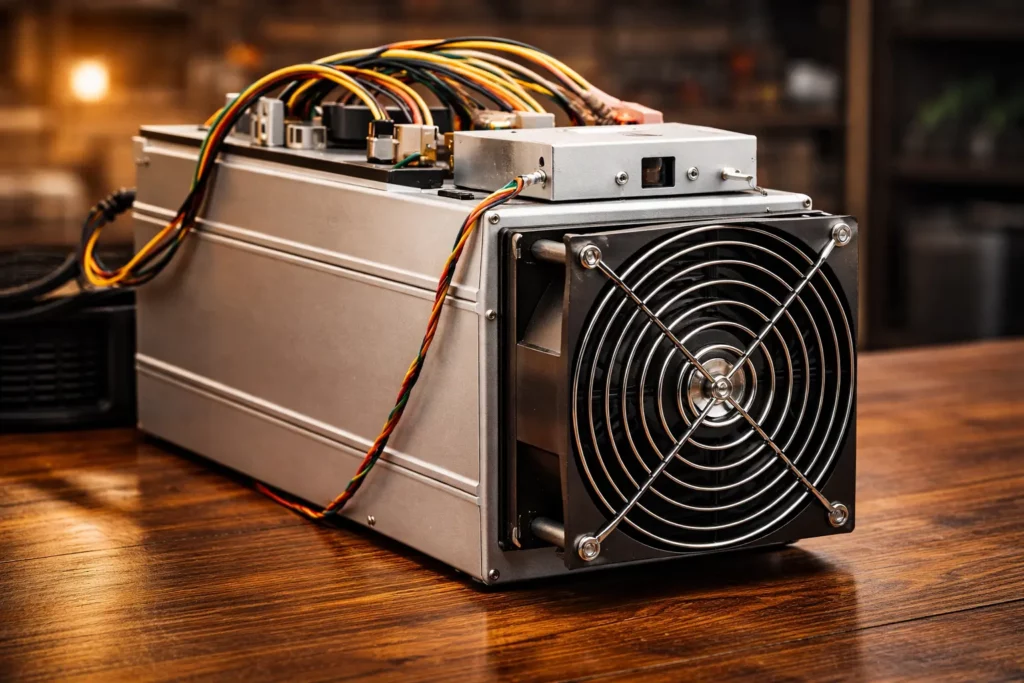
ASIC stands for Application-Specific Integrated Circuit. These are specialized machines built solely for mining Bitcoin’s SHA-256 algorithm, offering vastly greater efficiency than GPUs or CPUs. Popular models include Bitmain Antminer and MicroBT Whatsminer series.
Typical Costs:
- Entry-level ASIC: ~$2,000–$3,500
- Mid-range ASIC: ~$3,500–$6,000
- High-performance ASIC: $8,000+
b. Power Supply Unit (PSU)
ASICs draw significant power and require robust power supplies compatible with their energy demands. Expect to spend around $50–$300 for quality units.
c. Cooling and Ventilation
Mining hardware generates a lot of heat. You’ll need cooling fans, proper ventilation, or even advanced cooling solutions to avoid overheating and hardware damage. Budget $50–$500 (or more for advanced solutions).
d. Stable Internet Connectivity
A reliable wired Ethernet connection is preferred to ensure continuous mining uptime.
e. Mining Software
Most mining software — such as CGMiner or manufacturer firmware — is free, connecting your hardware to the Bitcoin network or mining pool.
f. Power Infrastructure Upgrades (Optional)
Depending on your home setup, you may need electrical upgrades (e.g., dedicated circuits or 220V outlets) to safely power high-draw ASICs.
4. Initial and Ongoing Costs
Bitcoin mining has both upfront and recurring costs:
Upfront (Hardware & Setup)
| Expense | Estimated Cost (USD) |
|---|---|
| ASIC Miner | $2,000 – $17,000+ |
| PSU | $50 – $300 |
| Cooling & Ventilation | $50 – $500+ |
| Network & Misc | $50 – $300 |
| Electrical Upgrade (if needed) | $300 – $800+ |
Total upfront can range from ~$2,500 to $20,000+, depending on hardware choice and setup complexity.
Recurring Costs
- Electricity — The highest ongoing cost. Running an ASIC continuously can add hundreds of dollars per month to your bill, depending on local rates and machine efficiency.
- Maintenance — Replacement parts, hardware wear, and network costs.
5. Expected Monthly Income (Realistic Expectations)
Important: Bitcoin mining rewards fluctuate based on network difficulty, electricity costs, BTC price, and hardware efficiency. There is no guaranteed monthly income.
A typical estimate for dedicated ASIC rigs shows:
- Solo Mining: Highly unpredictable; small home setups rarely find blocks regularly. Even with modern ASICs, your share of network hash power is tiny, so solo mining rewards may be rare and sporadic.
- Mining Pool: More consistent but shared rewards. Monthly BTC earnings might range from fractions of a coin to a small multiple, depending on your hash rate contribution and pool performance.
To estimate potential income:
- Use online mining profitability calculators.
- Input your ASIC’s hash rate, power consumption, electricity cost per kWh, and pool fees.
- Review projected BTC earnings and expected USD value based on the current BTC price.
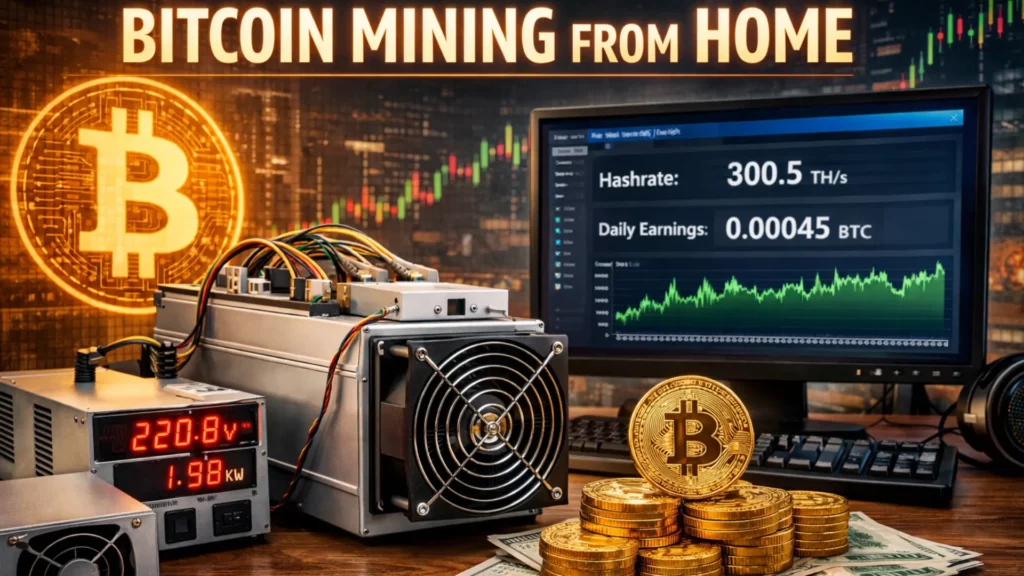
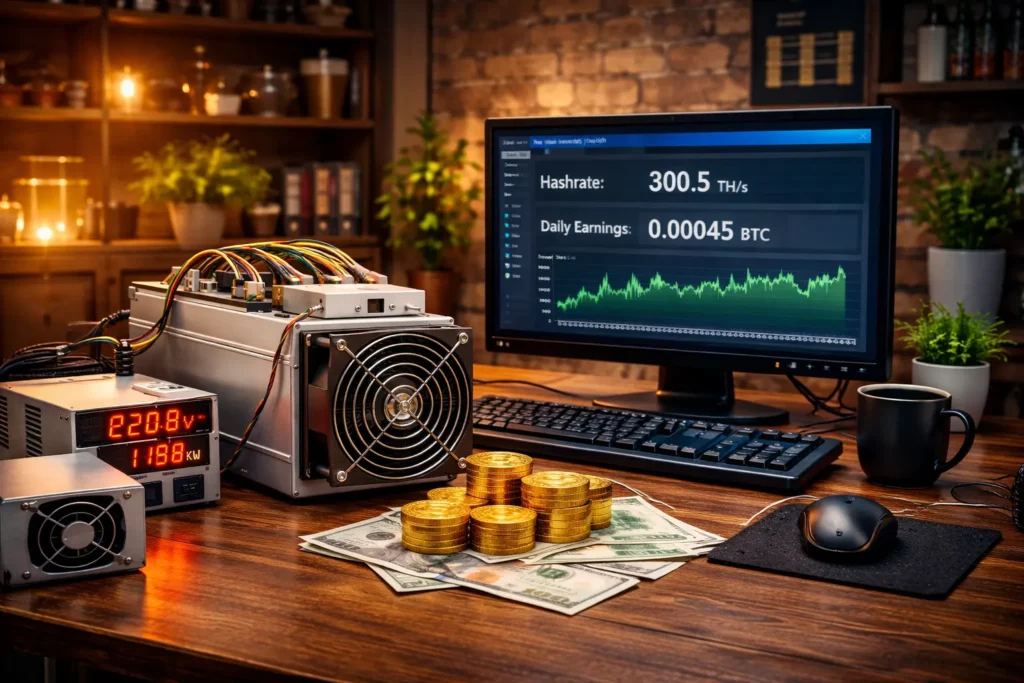
Real-world Example: A moderately efficient ASIC with 300 TH/s might earn a small amount of BTC monthly after electricity, possibly a few dollars to a couple of hundred dollars equivalent, depending on conditions. But profits aren’t guaranteed, and electricity costs can easily outweigh rewards. Always calculate break-even timelines before investing heavily.
6. Is Bitcoin Mining Legal at Home?
Global Perspective
Bitcoin mining itself is not illegal in most countries. The activity is simply participating in a decentralized protocol — no special license or permit is typically required.
However, legality can vary:
- China: Actual bans on crypto mining have been enacted.
- United States & Europe: Mining is legal but subject to business and tax laws.
- India: Cryptocurrencies, including Bitcoin, are not banned, and mining is allowed. However, profits from mining are taxable under Indian law and must be reported on tax returns.
Taxes
Earned Bitcoin from mining is treated as income and subject to tax. In India, for instance, gains are taxed under the Income Tax Act and must be declared.
Before starting, check local regulations and tax requirements. If needed, consult with a financial advisor experienced in crypto taxation.
7. Risks and Considerations
High Electricity Usage: Mining rigs draw significant power, meaning high utility bills.
Heat & Noise: ASICs can be loud (70–90 dB) and produce heat, requiring suitable space and ventilation.
Hardware Depreciation: ASICs lose value quickly as new, more efficient models arrive.
Volatility: Bitcoin’s price swings can dramatically alter profitability.
Conclusion
Starting Bitcoin mining from home is technically possible, but it demands a serious investment in specialized hardware, careful planning for power and cooling, and ongoing monitoring of profitability. It’s not a guaranteed income stream — and for many hobbyists, the economics may not make sense compared to simply buying Bitcoin or exploring other earning strategies.
Before you invest, thoroughly calculate expected costs, monthly energy usage, and profit potential. Also, ensure you understand local legal and tax obligations to avoid surprises. With the right setup and informed expectations, home Bitcoin mining can be a fascinating entry into the world of decentralized finance — but it’s far from a guaranteed ticket to easy income.

I am Pawan Kashyap currently living in Amritsar. I always try to grab new things from the cryptocurrency market. From my observations and trends in the market, I always try to provide the best and accurate information in the form of articles from this blog. Follow us on Facebook, Instagram, and Twitter to join us.